
- Why Processes Keep Changing Frequently
- Root Causes of Frequent Process Changes
- Business Implications of Process Instability
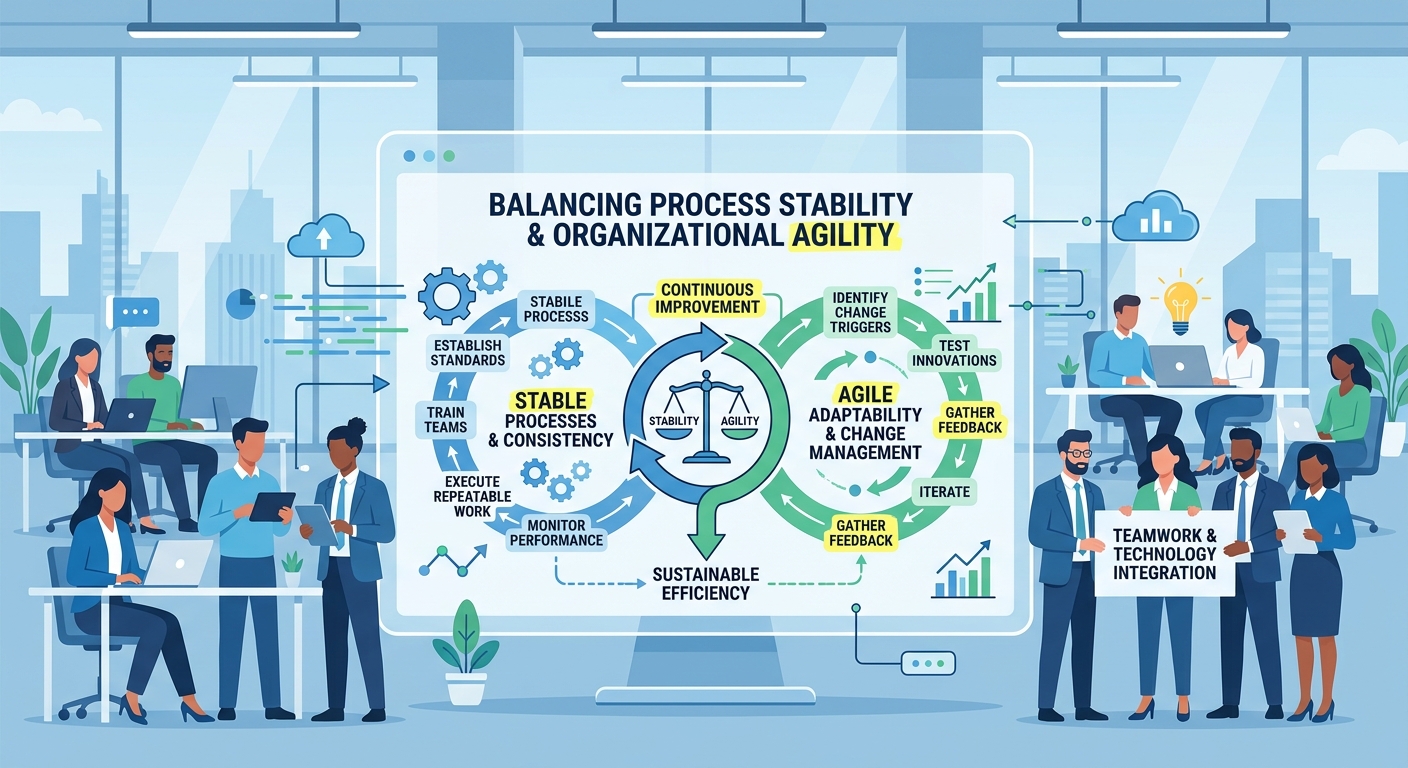
- Trade-offs Between Stability and Agility
- Common Mistakes Leading to Process Instability
- How to Create Stable and Consistent Processes
Why Processes Keep Changing Frequently
Processes keep changing frequently due to a complex mix of external market pressures and internal organizational issues. According to research, this instability arises from reactive responses to technological advances, shifting customer demands, and competitive market changes, combined with poor initial process design and ineffective communication (irjms.com). This creates a cycle of constant adjustments that undermine operational consistency.
Organizations often face these key challenges that drive frequent process changes:
- External volatility such as market shifts and new regulations forcing rapid adaptations.
- Internal fragility exposed by rapid growth leading to inefficiencies and communication breakdowns.
- Human factors like resistance to change and lack of clear process ownership.
For example, transportation-focused businesses supported by specialized BPO services often encounter shifting customer expectations and technology upgrades that necessitate continual process tweaks to maintain service quality and efficiency. This dynamic environment demands a strategy balancing responsiveness with stability, as seen in the taxi dispatching and ride-hailing industries.
Root Causes of Frequent Process Changes
The root causes of frequent process changes lie in the imbalance between the need for organizational agility and the need for operational stability. Research highlights that many organizations prioritize quick fixes to external pressures over establishing a solid process backbone, leading to recurring rework and inefficiencies (errolallenconsulting.com). Poor upfront planning, lack of strategic alignment, and failure to engage frontline employees are major contributors.
Key root causes include:
- Reactive rather than proactive change management approaches.
- Automating inefficient processes without prior optimization.
- Disconnected systems and data silos obstructing holistic process visibility.
- Insufficient training and unclear ownership of processes.
For instance, ride-hailing platforms often digitize legacy workflows without redesign, amplifying inefficiencies at scale. Effective process design requires integrating technology with human factors and strategic goals, which is critical for sustainable operations in industries like limo services and taxi dispatching.
Business Implications of Process Instability
Process instability carries significant costs and risks for businesses. Unmanaged frequent changes lead to rework, delays, inconsistent quality, and increased operational costs, directly impacting profitability and customer satisfaction (thrivebusiness.ca). At scale, fragmented processes can cause millions in lost productivity and elevate compliance risks.
The business implications include:
- Escalating operational costs due to rework and inefficiencies.
- Compromised compliance and increased operational risk.
- Employee burnout and reduced morale from constant disruptions.
- Challenges in scaling operations effectively.
For example, BPO services for limo and executive transportation highlight the need for stable reservation and dispatch processes to uphold premium customer experiences, especially during volume spikes. Without stability, service quality and operational resilience suffer markedly.
Trade-offs Between Stability and Agility
Achieving stability in processes requires balancing it with organizational agility. The research indicates that overly rigid processes can hinder innovation, while excessive agility leads to chaos and inconsistency (aiim.org). Many organizations mistakenly view these as mutually exclusive rather than complementary goals.
Trade-offs and limitations to consider:
- Rigid processes reduce adaptability to market changes.
- Excessive agility causes process chaos and inefficiency.
- Upfront investment in standardization and change management is necessary.
- Leadership commitment to continuous oversight is critical.
A practical implication is that transportation companies, including those using ride-hailing and taxi dispatching services, must invest in stable core processes before layering agile adaptations. This approach supports sustainable growth and operational excellence.
Common Mistakes Leading to Process Instability
Common mistakes that cause process instability include treating improvement as a one-time project, automating flawed processes, and neglecting stakeholder involvement and communication (prosci.com). These errors result in poor adoption and frequent rework.
Frequent misconceptions and mistakes are:
- Viewing process improvement as a finite event rather than continuous capability.
- Automating inefficient or broken processes.
- Failing to communicate the rationale behind changes to employees.
- Underestimating the scale of change and neglecting frontline input.
For example, companies supporting ride-hailing driver management often struggle with change resistance and poor communication, leading to skipped or misapplied process steps. Addressing these human factors is essential to create lasting process stability.
How to Create Stable and Consistent Processes
To create stable and consistent processes, organizations must establish a documented, standardized core process "backbone" while allowing for agile layers to adapt dynamically. Robust change management and continuous reinforcement are key to preventing weekly process upheavals (thrivebusiness.ca).
Best practices include:
- Developing clear and standardized core processes.
- Embedding continuous improvement with a balance of stability and agility.
- Engaging employees in process design and communication.
- Using data-driven analysis to monitor process performance and adoption.
- Leveraging specialized BPO services for scalable, consistent operations.
Industries such as taxi dispatching and ride-hailing benefit from partnering with experienced BPO providers like Fasttech BPO to maintain process stability while scaling operations efficiently. This strategic approach reduces rework, controls costs, and enhances customer satisfaction over time.
Learn more about how Taxi Dispatching BPO Services and Ride Hailing BPO Services support stable, scalable transportation operations.