
- Identifying Time-Wasting Tasks Consuming 20+ Hours Weekly
- Root Causes of Repetitive Tasks and Inefficiencies
- Strategies to Eliminate or Automate Repetitive Tasks
- Balancing Automation with Process Standardization
- Common Pitfalls and How to Avoid Them
- Practical Steps to Implement Change and Sustain Gains
Identifying Time-Wasting Tasks Consuming 20+ Hours Weekly
Tasks that consume more than 20 hours weekly often stem from repetitive, manual, and unstandardized operations. These tasks typically involve undocumented processes, manual data handling, and reactive problem solving that drains valuable resources. As highlighted in research, "Repetitive tasks often persist due to a lack of standardized operating procedures" and "manual data entry and reconciliation" are significant time drains (Deep Research Report).
Common types of time-wasting tasks include:
- Manual data transfers between systems without integration
- Ad-hoc or undocumented requests that become recurring
- Repetitive customer support or dispatch tasks without automation
- Frequent error correction and rework due to inconsistent processes
In transportation operations, such inefficiencies are particularly impactful. For example, taxi dispatching or ride-hailing platforms often face bottlenecks from manual dispatch coordination and driver management, which could consume excessive time without proper process design or automation support. Leveraging specialized BPO services like Taxi dispatching BPO services can help reduce these burdens.
Root Causes of Repetitive Tasks and Inefficiencies
The root causes of repetitive, time-consuming tasks usually stem from organizational and technical challenges. Key factors include lack of strategic process ownership, fear of change, technical debt, and inadequate training. The research notes that "Without a dedicated focus on process improvement, operational workflows evolve organically rather than being intentionally designed for efficiency." This leads to persistent inefficiencies and manual workarounds.
Other critical root causes are:
- Resistance to adopting new tools or automation due to perceived complexity
- Legacy systems creating data silos requiring manual bridging
- Short-term operational pressures overshadowing long-term process investments
- Skill gaps that limit effective use of existing automation technologies
These factors together create an environment where repetitive tasks remain entrenched and costly, limiting scalability and increasing risk. Addressing them requires a structured approach combining process standardization, training, and technology adoption.
Strategies to Eliminate or Automate Repetitive Tasks
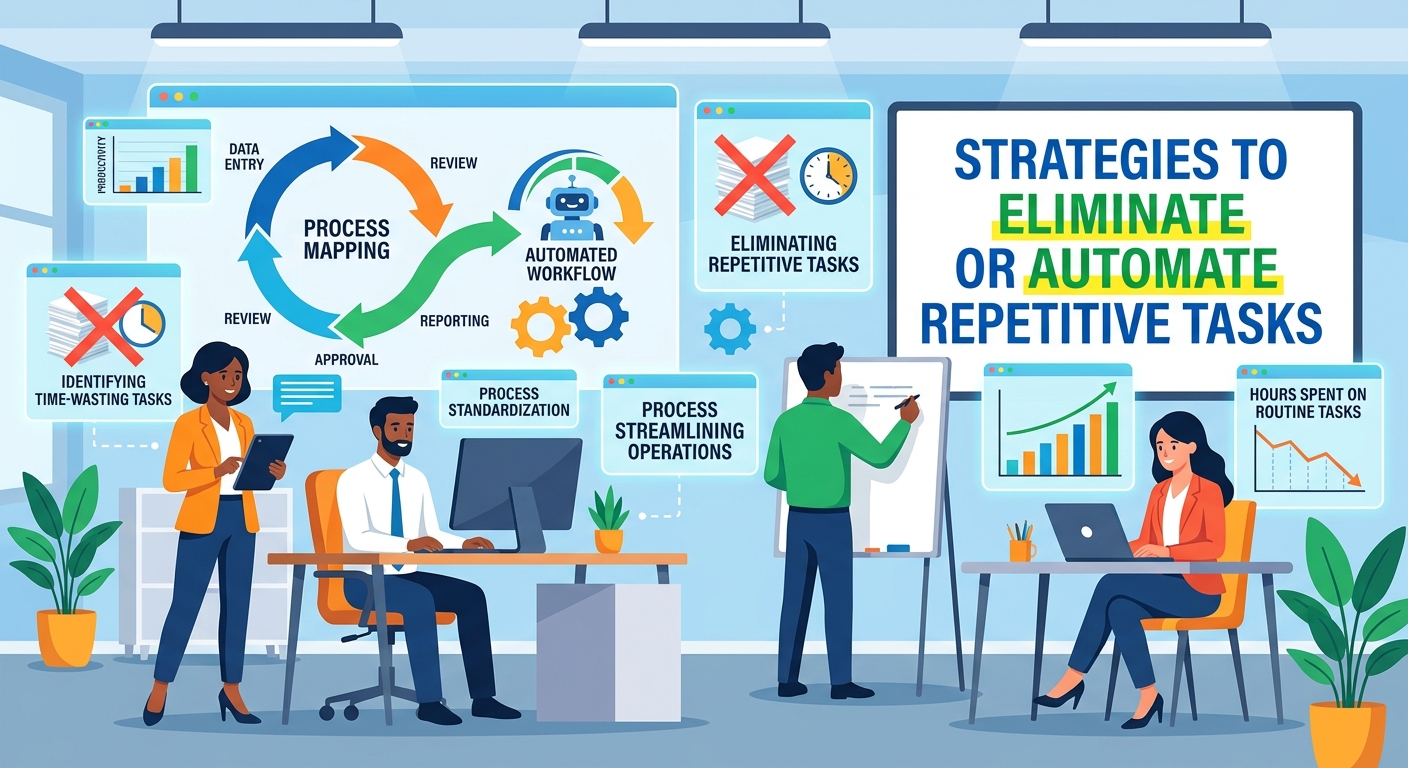
Eliminating time-wasting repetitive tasks involves first mapping and standardizing workflows, then selectively automating or delegating based on task complexity and frequency. The research advises prioritizing "systematic process mapping and standardization before strategic automation or delegation." This ensures automation does not just replicate inefficiencies.
Effective strategies include:
- Documenting and standardizing all high-frequency tasks to reduce errors and rework
- Implementing automation tools for manual data transfers and routine communications
- Delegating tasks that require human judgment but are repetitive in nature
- Regularly reviewing processes to identify new automation opportunities and eliminate scope creep
For transportation companies, partnering with specialized BPO providers such as Ride Hailing BPO Services or Limo Services BPO Services can accelerate automation and process improvements while maintaining service quality.
Balancing Automation with Process Standardization
Automation alone is insufficient if underlying processes are inconsistent or poorly defined. The research emphasizes that "Automating a broken or inconsistent process merely automates inefficiency." Hence, standardization must precede automation to maximize benefits and minimize risks.
Key considerations include:
- Conducting thorough process analysis to identify inefficiencies
- Engaging stakeholders to ensure buy-in and accurate process documentation
- Choosing automation tools aligned with standardized workflows
- Balancing flexibility and rigidity to allow for exceptions and human judgment
This balanced approach reduces execution complexity and ensures that automation delivers scalable, maintainable improvements rather than quick fixes that fail over time.
Common Pitfalls and How to Avoid Them
Many organizations fall into common traps when trying to reduce repetitive tasks. These include automating everything indiscriminately, neglecting continuous improvement, ignoring employee involvement, focusing on tools before processes, and underestimating change management challenges. The research warns against "Automating everything" and stresses that "Automation is not a one-time project" but requires ongoing refinement.
To avoid these pitfalls:
- Prioritize process analysis and employee input before tool selection
- Implement change management practices including training and communication
- Monitor automated workflows regularly and adjust as needed
- Recognize which tasks truly benefit from automation versus those requiring human skills
These practices improve adoption rates, reduce resistance, and ensure sustainable operational gains.
Practical Steps to Implement Change and Sustain Gains
Implementing lasting improvements requires disciplined execution and ongoing attention. Practical steps include establishing process ownership, investing in training, leveraging external expertise when needed, and setting up continuous monitoring and feedback loops. The research highlights the importance of a "disciplined approach: define and standardize processes first, then strategically automate or delegate based on clear cost-benefit analysis."
Key actions are:
- Assigning clear roles for process improvement and automation oversight
- Providing adequate training to build internal skills and confidence
- Partnering with specialized BPO providers to access expertise and scalable solutions
- Establishing metrics and KPIs to track time savings and error reduction
For transportation operations, solutions like Taxi dispatching BPO services offer a practical example of outsourcing repetitive dispatch and driver management tasks to improve efficiency and scalability.