
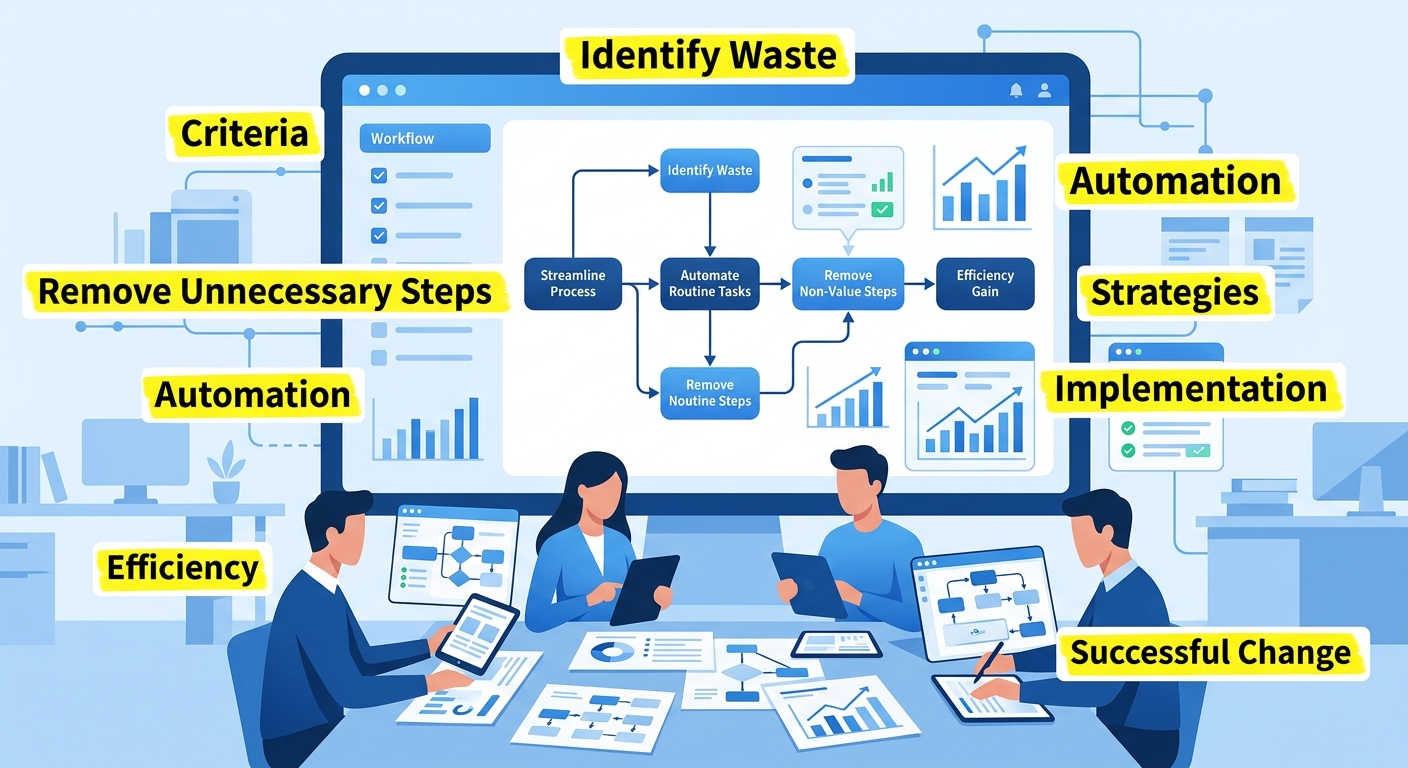
- Criteria for Identifying Unnecessary Steps in Operations
- Effective Strategies to Remove Unnecessary Steps
- Implementing Changes Successfully in Organizations
Criteria for Identifying Unnecessary Steps in Operations
Identifying unnecessary steps in operations hinges on recognizing activities that do not add value from the customer's perspective or lack essential legal or operational necessity. As highlighted by Lean Six Sigma and Value Stream Mapping methodologies, a critical focus is to find and eliminate "waste" — encompassing defects, overproduction, waiting, non-utilized talent, transportation, inventory, motion, and extra processing (sixsigmaonline.org; 6sigma.us). This systematic waste identification is foundational to streamlining operations effectively.
To accurately identify unnecessary steps, organizations should:
- Map out current processes in detail to visualize every step and its impact.
- Analyze steps through root cause techniques like the "5 Whys" to understand their necessity.
- Evaluate each step's contribution to customer value and operational compliance.
- Engage frontline employees who execute processes daily for practical insights.
For example, a taxi dispatching operation might map all booking and dispatch steps to identify redundant handoffs or unnecessary data entries, ensuring that only those steps critical to customer satisfaction and regulatory compliance remain. This approach aligns with the best practices in industries served by taxi dispatching BPO services where operational efficiency directly affects service quality.
Effective Strategies to Remove Unnecessary Steps
Removing unnecessary steps requires prioritization of elimination before simplifying, automating, or delegating processes. The consensus from research underscores that automating a flawed or unnecessary process only accelerates inefficiency (leansixsigmainstitute.org; totalprocessconsulting.com). Therefore, organizations must first focus on process cleanup and improvement to deliver true operational value.
Key strategies include:
- Systematically eliminate non-value-adding activities identified through process mapping.
- Simplify remaining steps to reduce complexity and improve flow.
- Leverage strategic automation only after processes are optimized.
- Delegate tasks appropriately to maximize resource utilization.
- Foster a culture of continuous improvement to sustain progress.
In the ride-hailing sector, for instance, this means refining driver onboarding and trip dispatch workflows to remove redundant verification steps before automating the process with software solutions, as seen in effective ride-hailing support models. This ensures technology enhances rather than complicates operations.
Implementing Changes Successfully in Organizations
Successful implementation of operational changes to remove unnecessary steps involves strong change management and frontline employee engagement. A people-centric approach ensures practical insights inform process redesign and reduces resistance to change, which is often a major barrier (lean6sigmahub.com; clevr.com).
Effective change implementation includes:
- Setting clear, measurable objectives aligned with business goals.
- Engaging employees at all levels for feedback and buy-in.
- Providing training and support to facilitate adoption.
- Monitoring progress continuously and reinforcing improvements.
- Maintaining a culture of continuous improvement to embed changes long-term.
For example, premium transportation companies leverage dedicated limo services BPO support to manage change in reservation and dispatch processes, ensuring VIP service quality is preserved while streamlining workflows. This strategic partnership demonstrates how operational excellence and customer experience go hand in hand when unnecessary steps are removed thoughtfully.