
- Introduction
- Identifying Messy Processes
- Techniques to Clean Up Messy Processes
- Sustaining Process Improvements Over Time
- Conclusion
Introduction
Cleaning up messy internal processes rapidly requires a disciplined, data-driven approach that focuses on root causes, standardization, and strategic use of technology. As highlighted in the research, success depends on strong leadership, active employee involvement, and a culture of continuous, iterative improvement rather than one-off fixes. This article explores efficient strategies to identify, rectify, and sustain improvements in internal processes for operations managers and process improvement specialists.
To achieve rapid cleanup, organizations must prioritize initiatives by impact and feasibility, avoiding the pitfall of automating flawed processes, which can exacerbate inefficiencies. Key themes include process mapping, root cause analysis, employee-centric change management, and leveraging technology as an enabler, not a cure-all.
Understanding these foundational principles helps companies build scalable and efficient operations that reduce cost, risk, and operational complexity.
Identifying Messy Processes
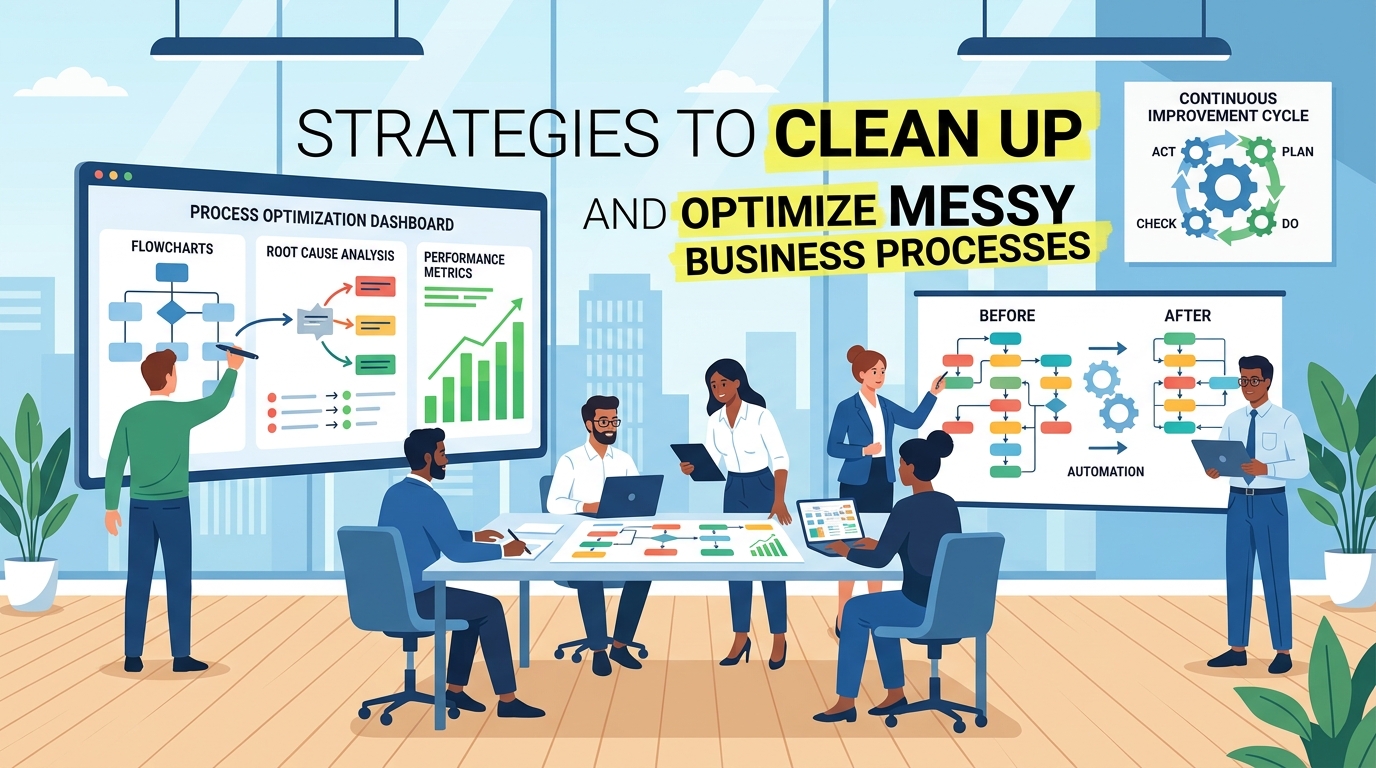
Identifying messy internal processes begins with gaining visibility through systematic process mapping and analysis. Visual documentation methods such as flowcharts, swimlane diagrams, and value stream maps are essential to reveal bottlenecks, redundancies, and non-value-adding steps. According to the research, this step is critical to understanding the "as-is" state before improvements can be made.
Effective identification also requires root cause analysis techniques like the "5 Whys" and Fishbone diagrams, which dig deeper than surface symptoms to uncover underlying inefficiencies. Key indicators of messy processes include:
- Lack of clear documentation and reliance on tribal knowledge
- Siloed operations and poor cross-team communication
- Absence of process ownership and accountability
- Reactive problem solving without systemic diagnosis
- Employee resistance due to neglected human factors
For transportation businesses, such as those supported by Fasttech BPO, identifying process inefficiencies early can prevent operational breakdowns and improve service consistency. Learn more about how taxi dispatching BPO services help streamline operations and reduce missed bookings.
Techniques to Clean Up Messy Processes
The fastest way to clean up messy internal processes is to combine strategic standardization, targeted root cause resolution, and technology-enabled automation of optimized workflows. Research emphasizes that automating broken processes only amplifies problems, so cleanup must begin with fixing the underlying issues.
Key techniques include:
- Systematic Process Mapping: Visualize workflows with detailed diagrams to identify inefficiencies.
- Root Cause Analysis: Use methods like the 5 Whys and Fishbone diagrams to find and address core issues.
- Strategic Standardization: Standardize repeatable processes for consistency, while allowing flexibility for unique cases.
- Employee Involvement: Engage frontline employees to gain insights and foster buy-in, reducing resistance.
- Data-Driven Monitoring: Establish KPIs to track improvements and detect new bottlenecks.
- Incremental Improvements: Focus on quick wins and small changes to build momentum and reduce risk.
In the transportation sector, leveraging specialized BPO services for ride-hailing and limo operations can facilitate process cleanup by providing expert operational support and continuous monitoring. Explore how ride-hailing support services optimize driver and rider lifecycle management for operational efficiency.
Sustaining Process Improvements Over Time
Sustaining improvements in internal processes requires embedding continuous improvement practices and strong accountability mechanisms within the organizational culture. The research highlights the importance of ongoing measurement, employee engagement, and leadership commitment to prevent backsliding into old habits.
Critical actions to sustain process gains include:
- Continuous Monitoring: Regularly track KPIs and performance metrics to ensure gains are maintained.
- Employee-Centric Change Management: Maintain open communication, training, and involvement to manage resistance and support adoption.
- Clear Ownership: Assign process owners responsible for ongoing performance and improvement.
- Iterative Refinement: Use feedback loops to incrementally enhance processes and adapt to changing business needs.
Implementing these strategies in transportation businesses is key to maintaining service quality and operational agility. For companies seeking specialized operational support, Fasttech BPO offers tailored solutions for industries including transportation-focused businesses that rely on real-time operations and high customer satisfaction.
Conclusion
Rapidly cleaning up messy internal processes is achievable through a disciplined approach emphasizing visibility, root cause analysis, strategic standardization, employee involvement, and continuous improvement. Avoiding the common mistake of automating flawed workflows ensures that technology acts as a true enabler of efficiency.
Transportation companies, in particular, benefit from partnering with specialized BPO providers like Fasttech BPO, who bring deep industry expertise to streamline operations in ride-hailing, taxi dispatching, and limo services.
By prioritizing high-impact improvements and fostering a culture of accountability and iterative progress, organizations can build resilient, scalable operations that reduce costs, mitigate risks, and enhance customer satisfaction.