
- Understanding the Challenge: Why Everything Feels Urgent
- Implementing Prioritization Frameworks to Manage Urgency
- Transitioning from Reactive to Proactive Operations
- Optimizing and Standardizing Processes for Efficiency
- Enhancing Communication and Transparency
- Leveraging Technology and Automation
- Managing Team Capacity to Prevent Burnout
- Fostering a Culture of Continuous Improvement
- Conclusion: Balancing Urgency with Strategic Operations
Understanding the Challenge: Why Everything Feels Urgent
When every operational task feels urgent, organizations often face a pervasive sense of chaos and pressure that impairs decision-making and productivity. This phenomenon, known as the "urgency illusion," arises because humans are naturally wired to react to immediate stimuli, making every alert seem critical regardless of its true importance. Additionally, systemic failures such as unclear organizational structures, ambiguous roles, and fragmented information exacerbate this feeling, leading to duplicated efforts and bottlenecks that further magnify urgency (advisicon.com).
Root causes include:
- Psychological tendency to overreact to immediate demands
- Lack of clear processes and role definitions
- Rapid growth outpacing system development
- A reactive, firefighting mindset
- Poor communication and information silos
These factors culminate in overburdened teams, increased errors, and declining morale, emphasizing the critical need for structured operational strategies to manage urgency effectively.
Implementing Prioritization Frameworks to Manage Urgency
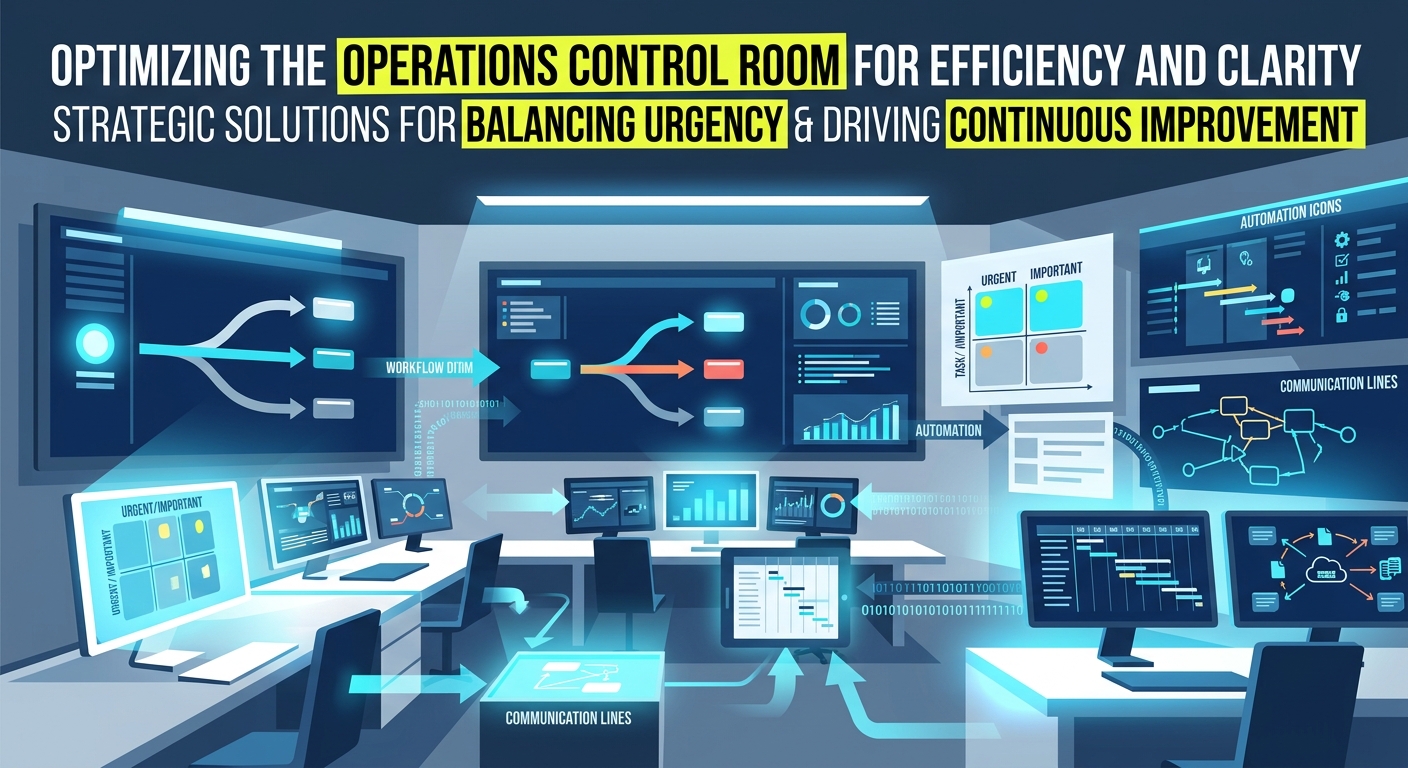
Prioritization frameworks are essential tools for distinguishing between tasks that are truly urgent and those that are important but not immediate. The Eisenhower Matrix, which categorizes tasks into urgent/important, urgent/not important, not urgent/important, and not urgent/not important, is frequently recommended to guide resource allocation and decision-making under pressure (prioritymanagement.com).
Benefits of using prioritization frameworks include:
- Clear differentiation of critical versus non-critical tasks
- Focused use of resources on high-impact activities
- Reduction of reactive, last-minute firefighting
- Improved alignment with long-term business objectives
For example, operational leaders can use this matrix to defer or delegate less important urgent tasks, ensuring that their teams maintain productivity without sacrificing quality or strategic focus.
Transitioning from Reactive to Proactive Operations
Shifting from a reactive, firefighting approach to a proactive operational strategy is key to reducing costs and improving efficiency. Proactive management focuses on prevention, early detection of issues, and system strengthening rather than merely responding to crises as they arise (crisiscompass.com.au).
Key elements of proactive operations include:
- Implementing monitoring and alert systems for early problem identification
- Regular process reviews and updates
- Building redundancy and resilience into workflows
- Training teams for foresight and strategic response
This transition not only lowers emergency repair costs but also enhances scalability and reduces operational risks.
Optimizing and Standardizing Processes for Efficiency
Process optimization and standardization form the foundation for efficient operations, especially under pressure. By identifying, mapping, and simplifying workflows, organizations can eliminate bottlenecks, reduce redundancies, and ensure consistency and scalability. Standardized processes also facilitate training, onboarding, and quality assurance (sqcentre.com).
Benefits of process optimization and standardization include:
- Reduced operational delays and errors
- Improved workflow clarity and team coordination
- Enhanced ability to scale without chaos
- Consistent service quality and customer satisfaction
For transportation businesses, such as those in taxi dispatching or ride-hailing, streamlining dispatch and driver management processes is critical. Services like Taxi Dispatching BPO Services and Ride Hailing BPO Services demonstrate how specialized outsourcing can support process standardization and operational efficiency.
Enhancing Communication and Transparency
Clear communication and organizational transparency are non-negotiable for managing urgency. Effective communication ensures that priorities, roles, and changes are clearly understood across all levels, preventing confusion and duplicated efforts. Transparency fosters trust and aligns teams towards common goals (prioritymanagement.com).
Strategies to enhance communication include:
- Establishing regular status updates and check-ins
- Using collaborative tools for real-time information sharing
- Defining clear escalation paths and decision-making protocols
- Encouraging open feedback loops and problem reporting
For transportation companies, maintaining transparent and consistent communication between dispatch, drivers, and customer support teams is essential, as seen in Limo Services BPO Services which emphasize professionalism and coordination.
Leveraging Technology and Automation
Technology and automation are powerful enablers of operational efficiency, especially when managing multiple urgent tasks. Automating repetitive and routine activities frees human capital to focus on higher-value work and reduces errors. Integrating operational tools into a cohesive system prevents fragmented workflows and enhances scalability (granta-automation.co.uk).
Key technology strategies include:
- Automating task prioritization and ticket routing
- Using dashboards for real-time workflow visualization
- Integrating communication and operational platforms
- Applying AI for predictive analytics and capacity planning
Transportation businesses can leverage these technologies to optimize dispatch and customer support, improving service levels and operational resilience.
Managing Team Capacity to Prevent Burnout
Respecting and managing team capacity is critical to sustaining productivity and morale. Overloading teams leads to burnout, errors, and high turnover, which ultimately degrade operational performance. Recognizing workload limits and balancing demands prevents these negative outcomes (crisiscompass.com.au).
Effective capacity management practices include:
- Regular assessment of team workload and stress levels
- Implementing flexible staffing and shift rotations
- Providing resources for employee support and recovery
- Using external partners to augment internal capabilities when needed
For example, companies in the ride-hailing and taxi dispatching sectors often partner with BPO providers to extend coverage without overwhelming internal teams, as highlighted in Ride Hailing BPO Services and Taxi Dispatching BPO Services.
Fostering a Culture of Continuous Improvement
Continuous improvement is a cultural imperative for long-term operational success. Cultivating a mindset of ongoing feedback, regular process review, and adaptation ensures that systems remain agile and responsive to evolving business needs. This proactive culture helps organizations avoid the trap of constant firefighting (continuous improvement).
Core elements of continuous improvement culture include:
- Encouraging employee feedback and idea sharing
- Scheduling regular process audits and updates
- Tracking key performance indicators and operational metrics
- Investing in training and development programs
This culture supports sustainable growth and operational excellence, particularly in industries requiring 24/7 support and dynamic response capabilities.
Conclusion: Balancing Urgency with Strategic Operations
Streamlining operations when everything feels urgent demands a disciplined, strategic approach that balances immediate demands with long-term objectives. By implementing prioritization frameworks, transitioning to proactive operations, optimizing processes, enhancing communication, leveraging technology, managing team capacity, and fostering continuous improvement, organizations can maintain efficiency and quality under pressure.
For transportation businesses seeking specialized operational support, partnering with industry-focused BPO providers such as Fasttech BPO, which offers tailored solutions for taxi dispatching, ride-hailing, and limo services, can provide scalable, reliable resources that prevent burnout and support growth.
This strategic balance enables businesses to overcome the urgency illusion and build resilient, high-performing operations that thrive even in high-pressure environments.