
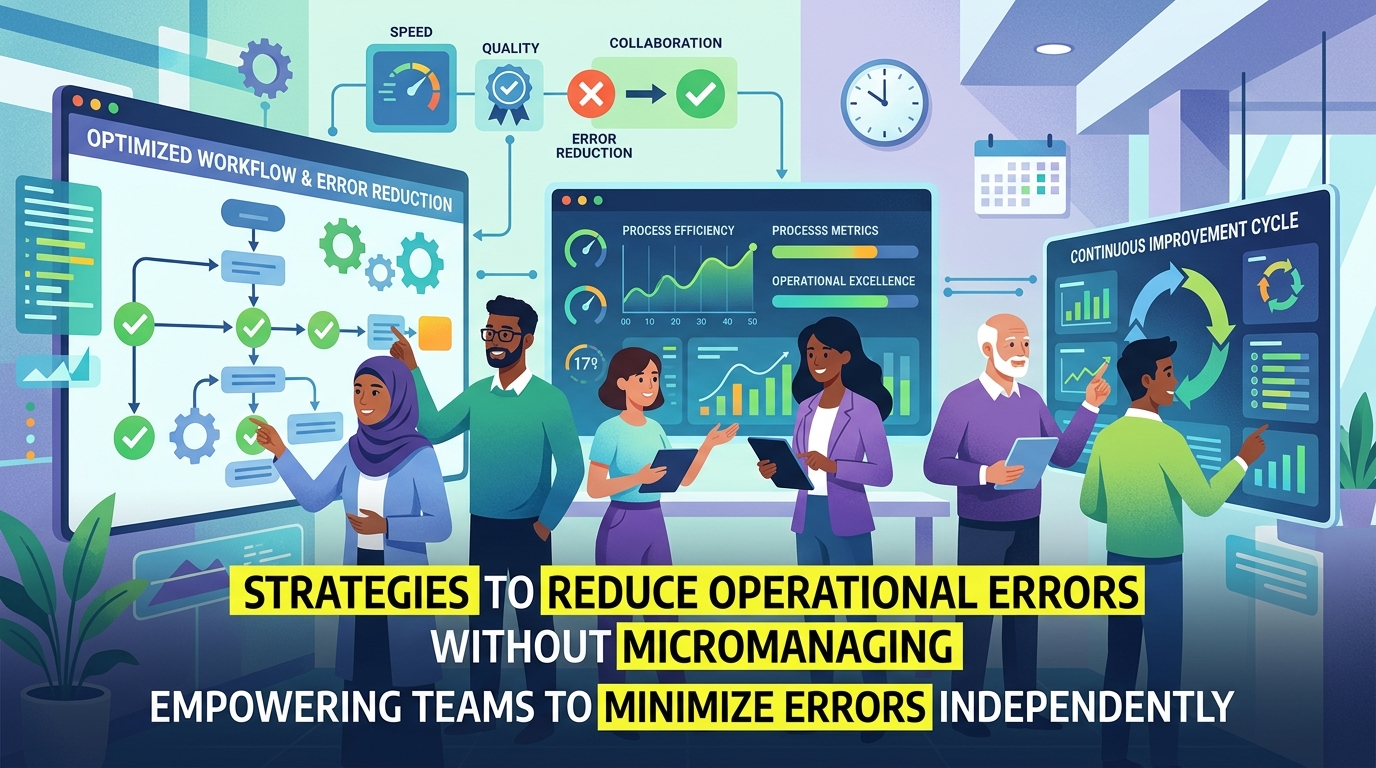
- Common Sources of Operational Errors
- Strategies to Reduce Operational Errors without Micromanaging
- Empowering Teams to Minimize Errors Independently
- Balancing Automation and Human Oversight
- Building a Culture of Continuous Improvement
Common Sources of Operational Errors
Operational errors most often arise from a mixture of human factors, flawed system design, and scaling challenges. Research highlights that these errors are not just the result of individual mistakes but stem from systemic weaknesses such as inadequate process design and poor communication across teams. As noted, "Human error is often not due to a lack of skill but factors like fatigue, distractions, or poor system design," indicating the complexity behind operational failures (lean6sigmahub.com).
Key sources include:
- Human Factors: Cognitive biases, fatigue, stress, and insufficient training impair employee performance.
- Poor System and Process Design: Complex, undocumented, and inconsistent workflows create error-prone environments.
- Scaling Challenges: Processes that worked at a small scale break down as operations grow, amplifying errors and bottlenecks.
- Lack of Accountability and Communication: Unclear roles and poor communication lead to misalignment and reactive problem-solving.
Understanding these root causes helps organizations address the underlying issues rather than just symptoms, which is crucial for sustainable error reduction. For transportation-focused businesses, such as taxi dispatching and ride-hailing platforms, these error sources can directly impact customer satisfaction and operational efficiency.
Strategies to Reduce Operational Errors without Micromanaging
Reducing operational errors without resorting to micromanagement requires systemic enablement through well-designed processes, technology, and empowered teams. This approach shifts the focus from direct control to creating an environment that inherently prevents errors. As emphasized, "designing processes that inherently prevent errors rather than relying on human vigilance" is a foundational strategy (lean6sigmahub.com).
Effective strategies include:
- Systemic Process Design: Standardize workflows, simplify procedures, and implement poka-yoke error-proofing techniques.
- Strategic Technology Integration: Automate repetitive tasks and use real-time monitoring to identify issues early.
- Empowered Workforce: Provide clear responsibilities and decision-making authority within defined parameters.
- Clear Communication and Leadership Alignment: Set clear goals and maintain open communication channels.
These strategies reduce the need for micromanagement by enabling teams to operate autonomously with confidence and clarity. Organizations in the transportation sector, including limo services, can benefit significantly from such approaches by ensuring consistent service quality without constant supervision.
Empowering Teams to Minimize Errors Independently
Empowering teams to minimize operational errors independently involves granting autonomy while providing the right support and training. Research shows that "empowering employees with autonomy, clear responsibilities, and decision-making authority within defined parameters is crucial" to reducing errors (lean6sigmahub.com). This empowerment fosters a culture of accountability and proactive problem-solving.
Key elements for empowerment include:
- Comprehensive Training: Equip employees with the knowledge and skills needed to perform confidently.
- Clear Roles and Responsibilities: Define expectations to prevent duplication and confusion.
- Culture of Learning: Treat errors as learning opportunities rather than causes for blame.
- Access to Data and Tools: Provide real-time data and technology to support decision-making.
For operations such as ride-hailing support, enabling front-line teams with these tools reduces dependency on constant oversight and improves overall operational resilience.
Balancing Automation and Human Oversight
While automation is critical for reducing manual errors, it must be balanced with effective human oversight to avoid complacency and new risks. The research warns of the "automation paradox," where increased automation can lead to reduced vigilance among operators and potential misconfigurations that cause larger disruptions (lean6sigmahub.com).
Best practices for balancing automation include:
- Automate repetitive and high-risk tasks to reduce human error.
- Maintain human monitoring to detect and respond to automation failures promptly.
- Regularly review and update automated processes to ensure alignment with operational goals.
- Train teams to work alongside automation effectively, enhancing their situational awareness.
In sectors like taxi dispatching, where real-time responsiveness is essential, this balance ensures that technology enhances rather than hinders operational reliability.
Building a Culture of Continuous Improvement
Establishing a culture of continuous improvement is vital for sustained error reduction without micromanagement. Frameworks like Lean, Six Sigma, and Kaizen enable organizations to identify root causes, measure performance, and implement incremental changes. As stated, "data-driven continuous improvement and regular audits are essential for this cycle" (lean6sigmahub.com).
Key practices include:
- Implement root cause analysis to address underlying problems.
- Use data analytics to monitor performance and identify trends.
- Encourage employee feedback and frontline insights for practical improvements.
- Align leadership commitment to foster accountability and open communication.
For transportation businesses, including limo services and ride-hailing companies, embedding continuous improvement helps maintain service excellence and adapt to changing operational demands. Partnering with specialized BPO providers can further bolster these efforts by offering scalable expertise and operational support.
Explore how ride-hailing support services and taxi dispatching BPO can integrate these strategies to reduce errors while empowering teams. Additionally, learn about optimizing operations across sectors in our industries overview.