
- Introduction
- Proactive Deflection and Self-Service
- Intelligent Ticket Routing and Prioritization
- Automation to Handle Repetitive Tasks
- Tiered Support and Agent Specialization
- Data-Driven Performance Monitoring
- Building a Scalable Support Infrastructure
- Conclusion
Introduction
Effectively managing more than 500 customer support tickets daily without descending into chaos requires a well-structured, multi-faceted approach. Organizations must implement strategies that combine intelligent ticket routing, proactive self-service options, automation, and continuous optimization of workflows to maintain order and efficiency in high-volume environments. As observed, these approaches are essential to avoid overwhelming agents and ensure timely, accurate customer service.
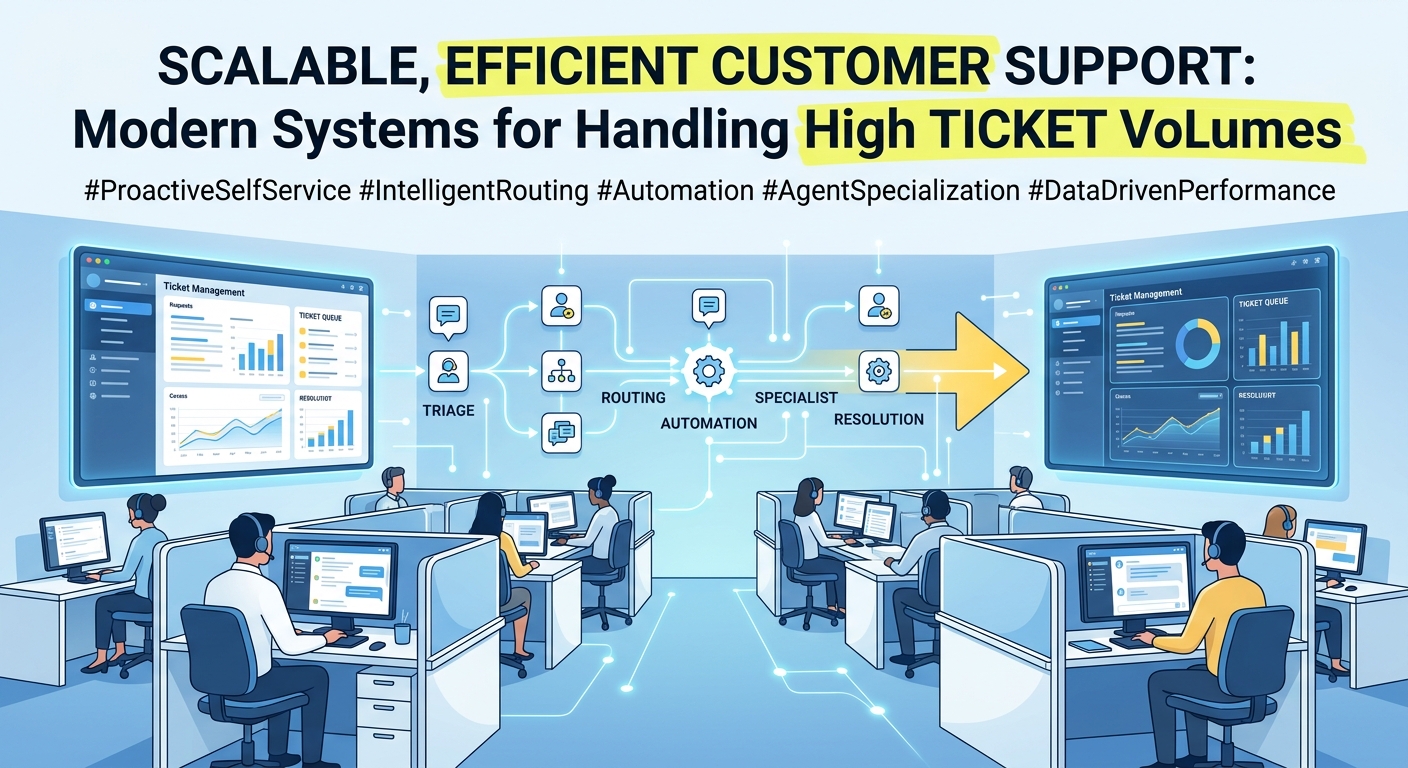
The core patterns include proactive ticket deflection, intelligent triage and routing, automation of repetitive tasks, tiered support models, and data-driven performance monitoring. These elements collectively help sustain scalable operations without compromising quality or increasing operational chaos.
For transportation businesses, leveraging specialized support systems is critical. Companies like Fasttech BPO provide tailored services in taxi dispatching BPO services and ride-hailing support, exemplifying how industry-specific outsourcing can support high-volume ticket management efficiently.
Proactive Deflection and Self-Service
Proactive deflection and self-service are foundational strategies for reducing inbound ticket volume and preventing agent overload. Organizations emphasize comprehensive knowledge bases, FAQs, interactive guides, and community forums to empower customers to find answers independently. This reduces the number of tickets reaching support agents, allowing them to focus on more complex issues.
Key components of successful self-service strategies include:
- Up-to-date, searchable knowledge bases tailored to common customer inquiries.
- Interactive troubleshooting guides and chatbots that handle basic queries instantly.
- Community forums where users can share solutions and best practices.
For transportation companies, self-service portals can significantly reduce routine inquiries related to bookings and status updates. Fasttech BPO’s approach in limo services BPO demonstrates how premium self-service combined with human support maintains high service standards while managing volume.
Intelligent Ticket Routing and Prioritization
Intelligent ticket routing ensures that tickets are categorized and directed to the right agents based on urgency, complexity, and agent expertise. This minimizes misdirection and speeds up resolution, essential in high-volume environments where every minute counts.
Effective routing systems include:
- Advanced categorization algorithms that assess ticket content and urgency.
- Prioritization frameworks that escalate critical issues promptly.
- Routing rules aligned with agent specialization to leverage expertise efficiently.
For example, taxi dispatch centers benefit from sophisticated routing to manage dispatch coordination and driver communications efficiently, as detailed in Fasttech BPO’s taxi dispatching BPO services.
Automation to Handle Repetitive Tasks
Automation plays a crucial role in managing large ticket volumes by handling repetitive tasks such as password resets, status updates, and common queries. This allows human agents to concentrate on complex issues that require empathy and problem-solving skills.
Automation techniques include:
- Chatbots for immediate responses to frequent questions.
- Auto-responses that acknowledge ticket receipt and provide estimated resolution times.
- Workflow automation for routine processes, reducing manual work and errors.
In the ride-hailing industry, automation integrated with human support enables faster response times and operational scalability, a balance highlighted in Fasttech BPO’s ride-hailing support offerings.
Tiered Support and Agent Specialization
Implementing a tiered support model with agent specialization is essential for handling diverse and complex ticket volumes. Tier 1 agents address basic inquiries, while Tier 2 and Tier 3 focus on more technical or specialized issues, ensuring efficient resolution paths.
Benefits of tiered and specialized support include:
- Faster resolution through focused expertise.
- Reduced risk of bottlenecks by clear escalation paths.
- Enhanced agent satisfaction and reduced burnout through role clarity.
Specialization is particularly important in transportation sectors where product complexity and customer expectations vary widely. Fasttech BPO’s structured approach across industries ensures that agents are trained and empowered to meet specific operational needs.
Data-Driven Performance Monitoring
Continuous monitoring of performance metrics enables support teams to identify bottlenecks and improve workflows. Metrics such as first response time, resolution time, backlog levels, and customer satisfaction scores guide decision-making and resource allocation.
Key monitoring practices include:
- Real-time dashboards to track ticket queues and agent workloads.
- Regular analysis of customer feedback and CSAT scores.
- Use of data to adjust staffing, training, and automation strategies.
Monitoring tools integrated into CRM and help desk platforms provide the transparency needed to maintain service quality at scale, as leveraged by Fasttech BPO’s support systems.
Building a Scalable Support Infrastructure
A scalable support infrastructure combines technology, processes, and partnerships to manage increasing ticket volumes without proportional resource increases. Leveraging robust CRM and help desk software integrated with communication channels and internal tools is fundamental.
Essential elements of scalable infrastructure include:
- Cloud-based, flexible help desk platforms that grow with demand.
- Integration of AI and automation tools to enhance efficiency.
- Partnerships with specialized BPO providers to handle peak loads and overflow.
Outsourcing to expert partners like Fasttech BPO, which specializes in transportation-focused operations, allows businesses to maintain consistent service quality and operational stability during growth phases.
Conclusion
Handling 500+ tickets per day without chaos demands a strategic, multifaceted approach combining proactive deflection, intelligent routing, automation, tiered support, and data-driven management. Investing in scalable technology and specialized teams, often augmented by external partners, is key to sustaining high-quality customer support at scale.
Transportation companies, in particular, benefit from industry-tailored BPO services like those provided by Fasttech BPO, which ensure operational efficiency and superior customer experiences across taxi dispatching, ride-hailing, and limo services.
For customer support managers, the imperative is clear: move beyond reactive ticket handling to a proactive, structured support system that continuously evolves with customer needs and business growth.