
- Why Support Teams Miss SLAs
- Main Causes of SLA Breaches
- How Workload Management Impacts SLA Performance
- Strategies for Better Workload Management
- The Role of Technology and Integration in SLA Compliance
- Conclusion: Building a Support Team That Meets SLAs
Why Support Teams Miss SLAs
Support teams miss Service Level Agreements (SLAs) due to a combination of inaccurate forecasting, inefficient processes, fragmented technology, and poor resource allocation. These factors create a gap between expected service delivery and actual performance, often leaving teams reactive rather than proactive. Research highlights that static SLA targets and a lack of integration across people, processes, and technology exacerbate the problem, causing frequent SLA breaches (assembled.com).
Key reasons include:
- Inaccurate ticket volume and handle time forecasting
- Workflow inefficiencies such as unclear escalation paths and excessive tool switching
- Disconnected systems causing delays in information retrieval
- Under-resourced teams with skill mismatches or burnout
- Unrealistic or unclear SLA definitions
- Absence of real-time SLA monitoring and alerts
For example, as businesses scale, operational complexity grows faster than support capacity, causing SLAs that were once achievable to become missed regularly without process and technology upgrades.
Main Causes of SLA Breaches
The primary causes of SLA breaches stem from systemic issues rather than individual agent performance. Root causes include growth outpacing operational maturity, siloed departmental operations, reactive management culture, and underinvestment in foundational elements like forecasting and training (cobbai.com).
Specifically, support teams often face:
- Overwhelming ticket volumes beyond forecasted capacity
- Fragmented communication and handoffs across teams
- Lack of tools for root cause analysis and breach prevention
- Agent burnout due to workload and context switching
- Static SLAs that do not evolve with business needs
These factors lead to financial penalties, customer churn, and operational inefficiencies, highlighting the need for a systemic, data-driven approach to SLA management.
How Workload Management Impacts SLA Performance
Workload management plays a critical role in meeting SLAs. Poor distribution of tasks, inaccurate forecasting, and unrealistic staffing contribute directly to missed SLAs. When support teams are overloaded or unevenly tasked, response and resolution times increase, causing breaches (pedowitzgroup.com).
Effective workload management involves:
- Accurate prediction of ticket volumes and complexity
- Balanced allocation of tasks based on agent skills and availability
- Realistic shrinkage assumptions including breaks and absences
- Monitoring and adjusting workloads in real-time to prevent bottlenecks
For instance, ride-hailing companies benefit from dynamic workload management that aligns driver and rider support with peak demand times, ensuring SLA compliance without excessive costs. Fasttech BPO’s ride-hailing support services demonstrate how specialized outsourcing can help maintain SLA adherence during volume spikes.
Strategies for Better Workload Management
To improve workload management and reduce SLA misses, organizations must adopt integrated, data-driven strategies. This includes investing in forecasting tools, streamlining workflows, and empowering agents with unified support platforms.
Key strategies include:
- Implementing robust forecasting models that account for seasonality and outliers
- Designing clear escalation paths and internal Operational Level Agreements (OLAs)
- Automating repetitive tasks to free agent capacity for complex issues
- Regularly reviewing and updating SLA definitions to align with current capabilities
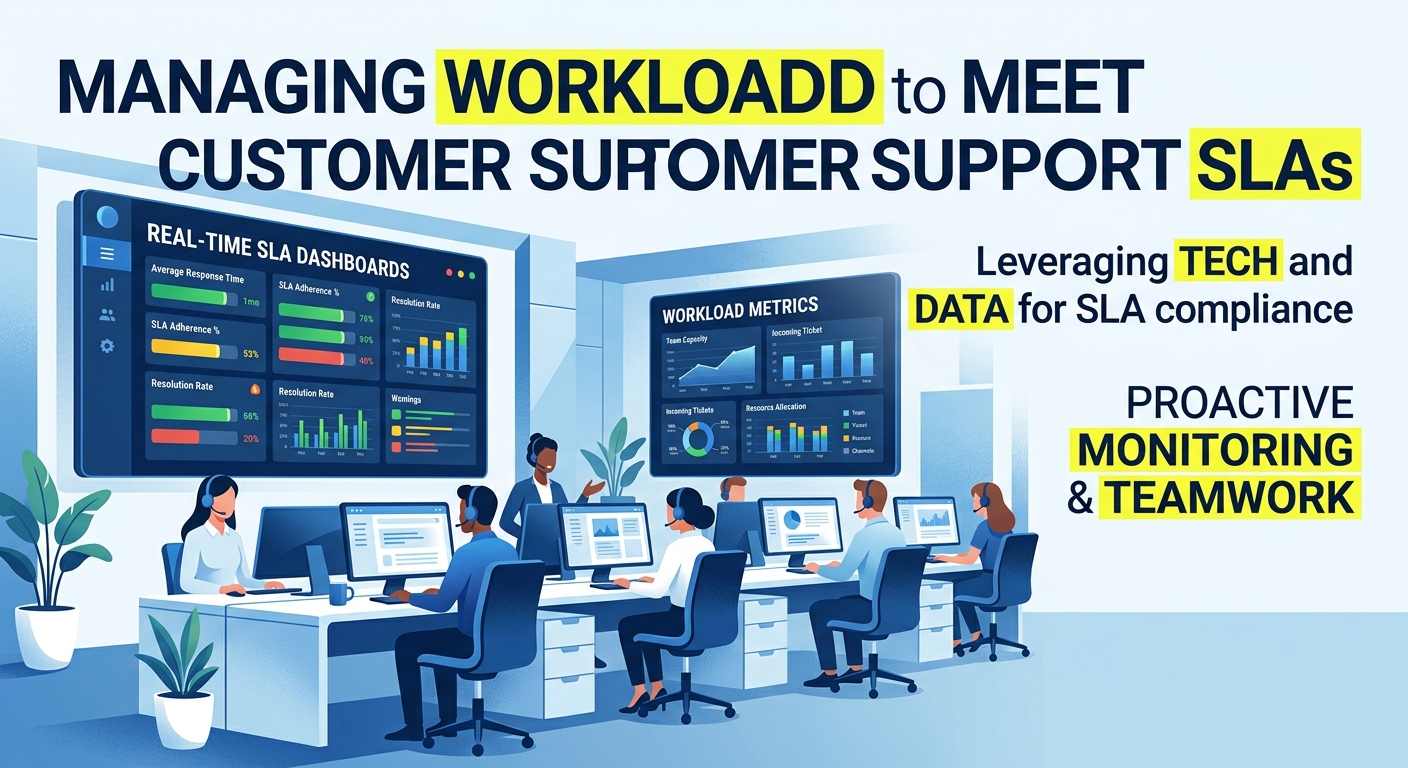
- Using real-time dashboards and alerts for proactive SLA monitoring
Taxi dispatch operations often face high variability in booking volumes. Utilizing specialized taxi dispatching BPO services can help manage overflow and maintain SLA standards without overburdening in-house teams.
The Role of Technology and Integration in SLA Compliance
Technology integration is vital to overcoming SLA challenges. Fragmented tech stacks slow down agents and create data silos, which reduce efficiency and increase resolution times. Unified platforms that combine ticketing, CRM, billing, and knowledge bases enable faster access to customer context and streamline workflows (darosoft.com).
Benefits of technology integration include:
- Reduced context switching for agents
- Consistent, accurate customer responses
- Automated workload balancing and ticket routing
- Real-time SLA performance tracking and alerts
Fasttech BPO’s comprehensive solutions for transportation industries show how integrated technology and outsourcing can help maintain SLA compliance while scaling operations. Learn more about the industries served and how technology supports their customer support systems.
Conclusion: Building a Support Team That Meets SLAs
Meeting SLAs consistently requires a holistic approach that combines accurate forecasting, efficient processes, technology integration, and proactive workload management. Organizations must avoid common pitfalls like treating SLAs as static documents or relying solely on hiring to solve capacity issues.
Key takeaways for support leaders include:
- Invest in data-driven forecasting and real-time SLA monitoring
- Streamline workflows and clarify escalation and handoff procedures
- Integrate technology platforms to reduce agent friction and improve resolution speed
- Regularly review and adjust SLAs to reflect evolving customer and business needs
- Consider partnering with specialized BPO providers to scale support without sacrificing quality
Fasttech BPO’s expertise in limo services BPO and other transportation sectors exemplifies how outsourcing can maintain SLA compliance and customer satisfaction during growth and peak demand periods.